The ‘oldest octopus’ in the world isn’t an octopus after all, scientists find
The ‘Oldest Octopus’ in the World Isn’t an Octopus After All, Scientists Find
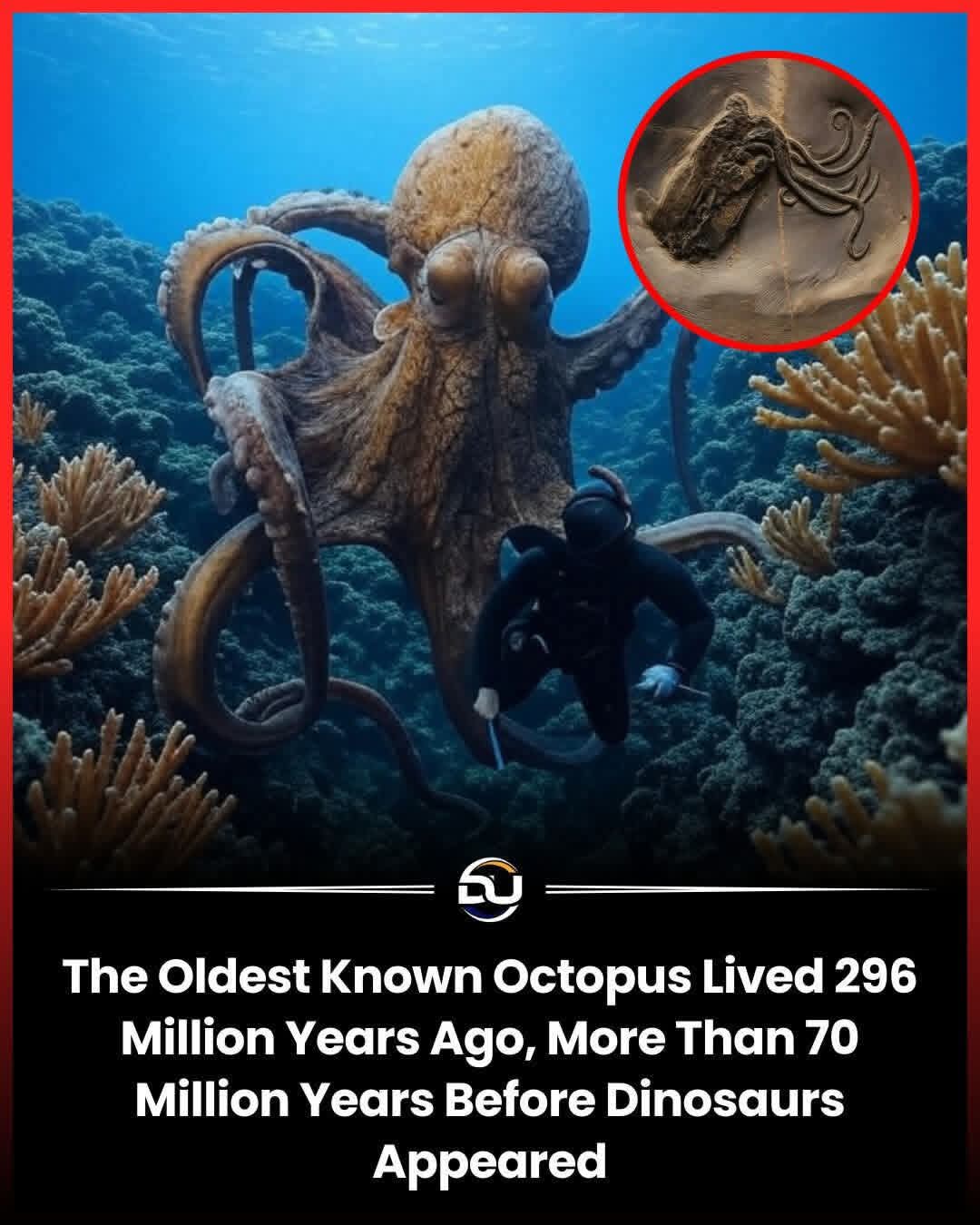
In the world of paleontology, discoveries often rewrite the history books, but few revisions are as startling as those involving the origins of the ocean's most mysterious creatures. For years, a specific fossil specimen was heralded as the definitive "oldest octopus" in the world, pushing the timeline of these eight-armed cephalopods back by millions of years. However, a groundbreaking new study has revealed a major twist: the ‘oldest octopus’ in the world isn’t an octopus after all, scientists find. This revelation not only challenges our understanding of cephalopod evolution but also highlights the incredible complexity of identifying soft-bodied organisms from the deep past.
The Fossil That Fooled the World: A Brief History
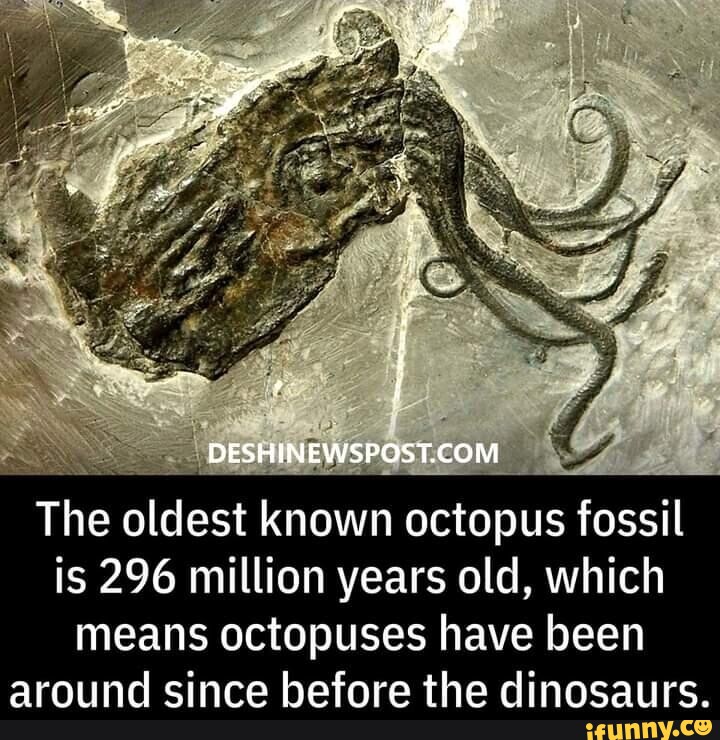
The story begins with the discovery of Syllipsimopodi bideni (or similar specimens from the Carboniferous and Jurassic periods), which for a long time were categorized as the primitive ancestors of modern octopuses. These fossils, preserved in exceptional detail within sedimentary rock, appeared to show the characteristic traits of an octopus: a soft body, a lack of an external shell, and multiple appendages. Some researchers dated these specimens back over 330 million years, suggesting that octopuses existed before the dinosaurs.
The scientific community was initially electrified. If these were indeed octopuses, it meant that the group had diverged from their squid-like cousins much earlier than previously thought. However, as imaging technology improved and our understanding of "vampyropods" expanded, cracks began to appear in the "octopus" classification. New analysis suggests that these ancient creatures belong to a different, albeit related, lineage that shares more in common with vampire squids than the common octopus we know today.
The Science of Misidentification: Why We Were Wrong
Identifying fossils of soft-bodied creatures is notoriously difficult. Unlike dinosaurs, which leave behind sturdy bones and teeth, cephalopods are composed almost entirely of muscle and skin. For a cephalopod to become a fossil, it must be buried quickly in an environment with very little oxygen (anoxia) to prevent decay. This process often flattens the creature into a two-dimensional "stain" on the rock.
Recent re-examinations using high-resolution CT scanning and elemental mapping have allowed scientists to see through the layers of rock. They found that the "oldest octopus" actually possessed certain internal structures—such as a specific type of gladius (an internal shell remnant)—that are absent in true octopuses. These features are instead indicative of the Vampyromorphida order. While octopuses and vampyromorphs are both part of the group Vampyropoda, they are distinct evolutionary paths. Calling this fossil an octopus was, in biological terms, like calling a tiger a house cat; they are related, but they are not the same.
Data Comparison: Octopus vs. Ancient Relatives
To understand why this distinction matters, we must look at the physical characteristics that define an octopus versus its ancient ancestors. The following table highlights the key differences found during the recent scientific re-evaluation.
| Fitur/Aspek | Deskripsi |
|---|---|
| Tentacle Count | The fossil showed 10 functional arms, whereas modern octopuses strictly have 8. |
| Internal Shell (Gladius) | The specimen retained a chitinous support structure common in squids, which true octopuses have lost. |
| Sucker Anatomy | New scans showed suckers lacked the complex muscular rings found in modern octopuses. |
| Classification Shift | Reclassified from Octopoda to a basal member of Vampyropoda. |
| Evolutionary Gap | This correction adds approximately 50-80 million years of mystery back into the octopus lineage. |
The Evolutionary Tree: Where Does the Octopus Really Begin?
With the "oldest" specimen removed from the octopus family tree, paleontologists are left with a significant gap. True octopuses, characterized by their eight arms and lack of any internal shell, likely emerged later during the Mesozoic era. The pressure of increasing predation—a phenomenon known as the Mesozoic Marine Revolution—likely forced their ancestors to lose their heavy shells and develop the speed, camouflage, and intelligence we see today.
The "not-an-octopus" fossil is now viewed as a "stem-group" cephalopod. These were the evolutionary experiments of the ocean. During the Carboniferous period, these creatures were likely the top predators of their niches, utilizing ten arms to grasp prey before evolution eventually favored the reduction of limbs for specialized tasks. This find underscores that evolution is not a straight line but a tangled bush of trial and error.
The Role of Technology in Modern Paleontology
How did we miss these details for decades? The answer lies in the limitations of 20th-century technology. In the past, scientists relied on visual inspection and rudimentary photography. Today, we have access to:
- Synchrotron X-ray Microtomography: Allows for 3D reconstruction of fossils without damaging the rock.
- Chemical Mapping: Detecting traces of copper or melanin to identify ancient ink sacs and eyes.
- Phylogenetic Modeling: Computer algorithms that compare thousands of traits to find the most likely evolutionary "home" for a species.
Why This Scientific Correction Matters for the Public
While it might seem like a minor taxonomic adjustment, the fact that the ‘oldest octopus’ in the world isn’t an octopus after all matters for how we understand biodiversity. It teaches us that the traits we associate with "modern" animals—like the octopus's high intelligence and incredible flexibility—were hard-won over hundreds of millions of years. It also serves as a reminder that science is a self-correcting process. When new evidence emerges, scientists must be willing to let go of old labels, even if those labels were famous.
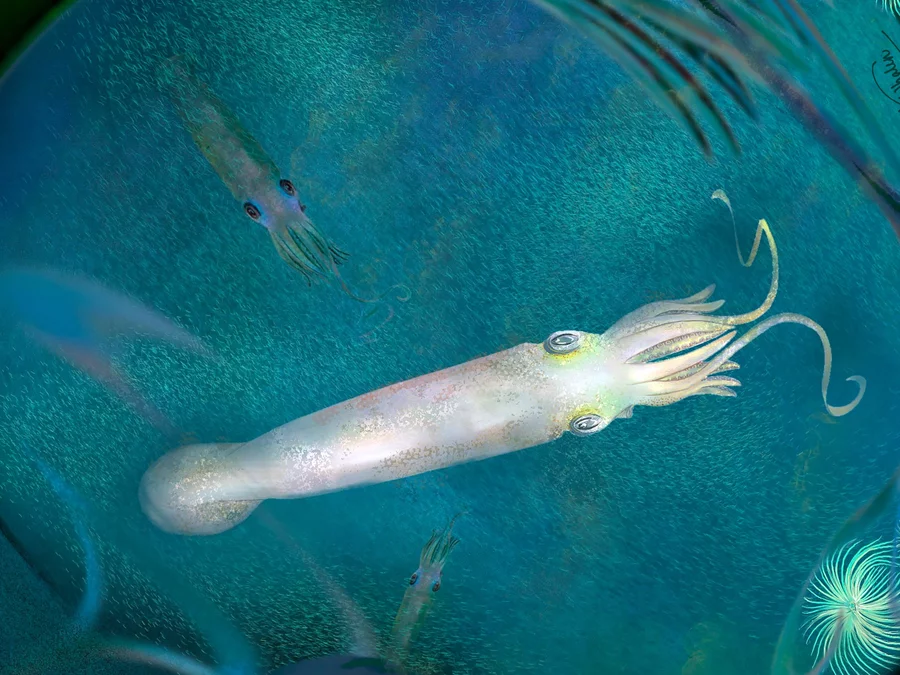
Furthermore, this discovery reignites interest in the "Vampire Squid" (Vampyroteuthis infernalis), which is neither a squid nor an octopus, but a living fossil. The reclassified fossils suggest that the lineage leading to the vampire squid was once much more diverse and dominant in the ancient oceans than previously realized.
FAQ: Understanding the Cephalopod Breakthrough
1. If it wasn't an octopus, what was it?
Scientists now believe it was a primitive relative known as a "vampyropod." While related to octopuses, it possessed ten arms and internal structures that align it more closely with the ancestors of vampire squids.
2. How old was the fossil in question?
The most famous specimen, Syllipsimopodi bideni, dates back to the Mississippian period, approximately 328 million years ago. While still a revolutionary find, its classification as a "true" octopus has been retracted.
3. When did the first true octopus actually appear?
The fossil record for true octopuses is sparse, but most experts agree that recognizable octopuses appeared during the Jurassic period, roughly 160 to 190 million years ago, much later than the misidentified Carboniferous fossils.
4. Does this mean previous science was "wrong"?
Not exactly. Science is an iterative process. Previous researchers worked with the tools they had. New technology provided better data, leading to a more accurate interpretation of the fossil's anatomy.
Conclusion
The world of paleontology is often a detective story written in stone. The realization that the ‘oldest octopus’ in the world isn’t an octopus after all is a testament to the rigor of modern scientific inquiry. It reminds us that our understanding of life's history is always subject to change as we peel back the layers of time. While we may have lost the "oldest" title for now, what we have gained is a much clearer, more nuanced picture of how cephalopods conquered the oceans. As technology continues to advance, who knows what other secrets are hiding in plain sight within our museum drawers, waiting to be rediscovered.
For now, the octopus remains a masterpiece of evolution—even if its family tree just got a little more complicated.
The ‘oldest octopus’ in the world isn’t an octopus after all, scientists find
The ‘oldest octopus’ in the world isn’t an octopus after all, scientists find Wallpapers
Collection of the ‘oldest octopus’ in the world isn’t an octopus after all, scientists find wallpapers for your desktop and mobile devices.
Crisp The ‘oldest Octopus’ In The World Isn’t An Octopus After All, Scientists Find Background Nature
A captivating the ‘oldest octopus’ in the world isn’t an octopus after all, scientists find scene that brings tranquility and beauty to any device.

Dynamic The ‘oldest Octopus’ In The World Isn’t An Octopus After All, Scientists Find Capture for Mobile
Find inspiration with this unique the ‘oldest octopus’ in the world isn’t an octopus after all, scientists find illustration, crafted to provide a fresh look for your background.

High-Quality The ‘oldest Octopus’ In The World Isn’t An Octopus After All, Scientists Find Picture Nature
Experience the crisp clarity of this stunning the ‘oldest octopus’ in the world isn’t an octopus after all, scientists find image, available in high resolution for all your screens.

Serene The ‘oldest Octopus’ In The World Isn’t An Octopus After All, Scientists Find Image in HD
Discover an amazing the ‘oldest octopus’ in the world isn’t an octopus after all, scientists find background image, ideal for personalizing your devices with vibrant colors and intricate designs.
Vibrant The ‘oldest Octopus’ In The World Isn’t An Octopus After All, Scientists Find Artwork Illustration
Explore this high-quality the ‘oldest octopus’ in the world isn’t an octopus after all, scientists find image, perfect for enhancing your desktop or mobile wallpaper.

Serene The ‘oldest Octopus’ In The World Isn’t An Octopus After All, Scientists Find Moment for Mobile
Discover an amazing the ‘oldest octopus’ in the world isn’t an octopus after all, scientists find background image, ideal for personalizing your devices with vibrant colors and intricate designs.
Breathtaking The ‘oldest Octopus’ In The World Isn’t An Octopus After All, Scientists Find Image Digital Art
Explore this high-quality the ‘oldest octopus’ in the world isn’t an octopus after all, scientists find image, perfect for enhancing your desktop or mobile wallpaper.
Gorgeous The ‘oldest Octopus’ In The World Isn’t An Octopus After All, Scientists Find Design for Your Screen
A captivating the ‘oldest octopus’ in the world isn’t an octopus after all, scientists find scene that brings tranquility and beauty to any device.

Detailed The ‘oldest Octopus’ In The World Isn’t An Octopus After All, Scientists Find Artwork in HD
Transform your screen with this vivid the ‘oldest octopus’ in the world isn’t an octopus after all, scientists find artwork, a true masterpiece of digital design.

Vibrant The ‘oldest Octopus’ In The World Isn’t An Octopus After All, Scientists Find Wallpaper Photography
Transform your screen with this vivid the ‘oldest octopus’ in the world isn’t an octopus after all, scientists find artwork, a true masterpiece of digital design.
Exquisite The ‘oldest Octopus’ In The World Isn’t An Octopus After All, Scientists Find Picture for Your Screen
A captivating the ‘oldest octopus’ in the world isn’t an octopus after all, scientists find scene that brings tranquility and beauty to any device.
Breathtaking The ‘oldest Octopus’ In The World Isn’t An Octopus After All, Scientists Find Wallpaper Concept
Discover an amazing the ‘oldest octopus’ in the world isn’t an octopus after all, scientists find background image, ideal for personalizing your devices with vibrant colors and intricate designs.
Vibrant The ‘oldest Octopus’ In The World Isn’t An Octopus After All, Scientists Find Abstract Photography
Explore this high-quality the ‘oldest octopus’ in the world isn’t an octopus after all, scientists find image, perfect for enhancing your desktop or mobile wallpaper.

Vibrant The ‘oldest Octopus’ In The World Isn’t An Octopus After All, Scientists Find Artwork Nature
Discover an amazing the ‘oldest octopus’ in the world isn’t an octopus after all, scientists find background image, ideal for personalizing your devices with vibrant colors and intricate designs.

Vivid The ‘oldest Octopus’ In The World Isn’t An Octopus After All, Scientists Find Moment for Mobile
Explore this high-quality the ‘oldest octopus’ in the world isn’t an octopus after all, scientists find image, perfect for enhancing your desktop or mobile wallpaper.

Crisp The ‘oldest Octopus’ In The World Isn’t An Octopus After All, Scientists Find View for Mobile
This gorgeous the ‘oldest octopus’ in the world isn’t an octopus after all, scientists find photo offers a breathtaking view, making it a perfect choice for your next wallpaper.

Mesmerizing The ‘oldest Octopus’ In The World Isn’t An Octopus After All, Scientists Find Capture for Your Screen
Explore this high-quality the ‘oldest octopus’ in the world isn’t an octopus after all, scientists find image, perfect for enhancing your desktop or mobile wallpaper.

Gorgeous The ‘oldest Octopus’ In The World Isn’t An Octopus After All, Scientists Find Scene in HD
This gorgeous the ‘oldest octopus’ in the world isn’t an octopus after all, scientists find photo offers a breathtaking view, making it a perfect choice for your next wallpaper.

Gorgeous The ‘oldest Octopus’ In The World Isn’t An Octopus After All, Scientists Find View for Desktop
Find inspiration with this unique the ‘oldest octopus’ in the world isn’t an octopus after all, scientists find illustration, crafted to provide a fresh look for your background.

Captivating The ‘oldest Octopus’ In The World Isn’t An Octopus After All, Scientists Find Abstract Illustration
This gorgeous the ‘oldest octopus’ in the world isn’t an octopus after all, scientists find photo offers a breathtaking view, making it a perfect choice for your next wallpaper.
Download these the ‘oldest octopus’ in the world isn’t an octopus after all, scientists find wallpapers for free and use them on your desktop or mobile devices.